Commercial floors built for daily traffic.
San Tan Valley's commercial corridors along Hunt Highway, Gantzel Road, Ironwood Drive and Bella Vista Road have grown quickly, bringing new auto shops, medical offices, salons, restaurants, gyms and retail stores. Each of these businesses relies on floors that look professional, clean easily and stand up to daily traffic. Commercial epoxy flooring delivers all three.
A commercial system is selected based on how the space is used. An auto service bay needs chemical and impact resistance. A clinic needs a seamless, hygienic surface that tolerates disinfectants. A retail store wants an attractive finish that complements its brand. A restaurant kitchen needs slip resistance and the ability to handle grease, heat and constant cleaning. We assess each of these requirements before recommending a system.
Common commercial applications
- Auto repair and detailing shops that handle oil, coolant and heavy equipment.
- Medical, dental and veterinary clinics that require hygienic, cleanable floors.
- Salons, spas and barbershops where chemicals, water and style all matter.
- Gyms and fitness studios that see dropped weights and constant cleaning.
- Retail and showrooms that want a high-end, branded appearance.
- Restaurants and commercial kitchens that need slip-resistant, sanitary surfaces.
Why businesses choose resin flooring.
Commercial floors are an investment in your brand, your staff and your customers. Resin flooring offers advantages over vinyl, tile and bare concrete that make it a strong choice for many businesses.
- Durability. Withstands foot traffic, carts, equipment and impacts.
- Seamless and hygienic. No grout lines or seams for dirt and bacteria to collect.
- Easy maintenance. Cleans quickly with standard commercial methods.
- Chemical resistance. Handles oils, cleaners, disinfectants and spills.
- Safety options. Anti-slip textures and safety markings improve workplace safety.
- Brand presence. Custom colors, flake blends, metallics and logos create a memorable look.
- Bright spaces. Reflective finishes improve light levels and make spaces feel clean and open.
For many business owners, the biggest advantage is longevity. A properly installed resin floor can serve for many years with routine maintenance, avoiding the disruption and cost of frequent replacement.
Choosing a commercial floor system.
We match the system to the space rather than using a one-size-fits-all approach.
Flake systems
Durable and forgiving, flake floors hide dirt and wear and provide built-in texture. They are popular in auto shops, gyms, clinics, break rooms and back-of-house areas.
Solid-color epoxy and urethane
Clean and uniform, solid colors work well in light industrial spaces, storage rooms and areas where markings and zones are needed. Urethane topcoats add chemical and abrasion resistance.
Metallic and decorative finishes
For showrooms, salons, boutiques and offices, metallic epoxy and custom decorative floors create a premium appearance that reinforces your brand.
High-performance systems
Spaces with heavy chemical exposure, hot water washdowns or heavy loads may require thicker, specialized systems. We discuss these needs during the site visit and recommend the right solution.
We always start with how the floor is used, not what looks best in a brochure. The right system balances performance, appearance and budget.
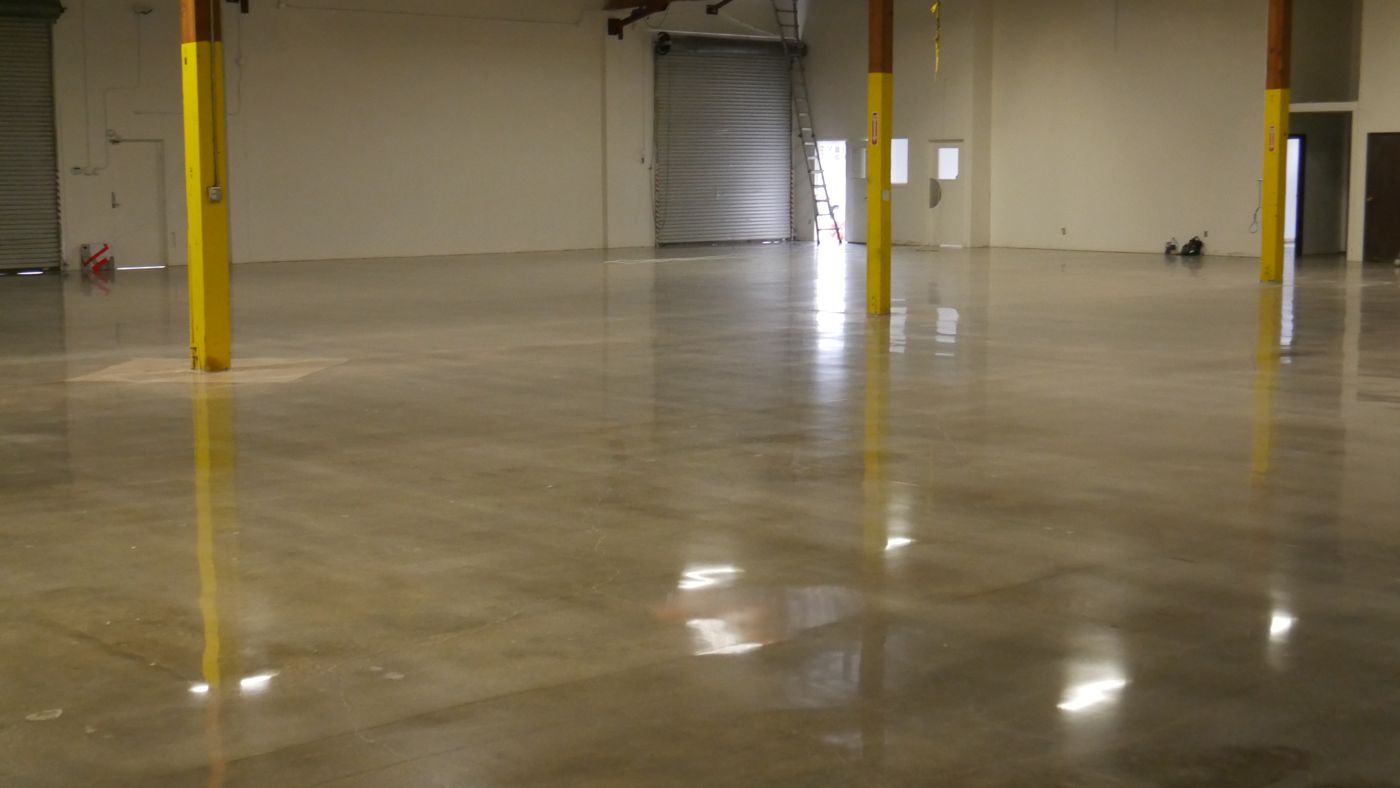 High-gloss commercial finish
Working with San Tan Valley businesses.
Many commercial spaces in the area are in newer strip centers and industrial flex buildings with slabs that were sealed or left bare by the builder. Others are older buildings with existing coatings, adhesives or tile that must be removed. We evaluate the slab during the site visit, test moisture levels and identify any repairs needed before coating.
We also understand the realities of running a business. Downtime costs money. We schedule installations after hours, on weekends or in phases so you can stay open. Fast-curing polyaspartic and polyurea systems allow some areas to return to service quickly. We coordinate with property managers and landlords when needed and provide documentation for your records.
How commercial projects are planned and installed.
Every commercial project begins with a site visit to measure, assess the slab and discuss your schedule and requirements. We then provide a written proposal with the recommended system, scope, timeline and any phasing.
- Preparation: shot blasting or diamond grinding, crack and joint repair, and moisture mitigation if needed.
- Application: primer, body coats, decorative layers and topcoats applied according to the system.
- Markings: safety lines, zones, logos and signage added as specified.
- Handover: final inspection, cure schedule and maintenance guidance for your staff.
We keep work areas clean, control dust and coordinate closely with your team so the project runs smoothly.
What different businesses need from a floor.
Every industry asks something different of its floors. Understanding those needs is the starting point for every commercial recommendation we make.
Automotive
Auto repair shops, detailers and tire shops need floors that resist oil, brake fluid, coolant and solvents, tolerate jack stands and rolling equipment, and remain easy to clean. Flake systems with chemical-resistant topcoats are popular, along with markings for service bays.
Healthcare and veterinary
Clinics need seamless, non-porous surfaces that tolerate frequent disinfection. Coved bases that carry the coating up the wall eliminate the seam where floor meets wall, improving hygiene.
Fitness
Gyms and studios need impact resistance for dropped weights, slip resistance for sweat and cleaning, and finishes that look sharp. Flake and solid-color systems with textured topcoats work well, often combined with rubber flooring in lifting zones.
Food service
Kitchens and food-prep areas require slip resistance, resistance to hot water and cleaning chemicals, and sanitary, seamless surfaces. These spaces may need specialized high-build systems.
Retail and offices
Retail and office spaces prioritize appearance and easy maintenance. Metallic, decorative flake and solid-color systems create a polished look that supports the brand.
Safety, slip resistance and compliance.
Commercial floors must keep employees and customers safe. Slip resistance is a key consideration, especially at entries, in kitchens, wash bays and restrooms. We adjust topcoat texture to the traffic and conditions in each area, balancing grip with cleanability.
Markings are another important safety tool. We can install aisle lines, walkways, hazard zones, ADA paths of travel and equipment boundaries using durable coatings that outlast paint or tape. We also consider transitions between flooring types, door thresholds and ramps to reduce trip hazards. If your business has specific requirements from insurers, landlords or regulators, we will review them during the site visit and incorporate them into the proposal.
A typical commercial project timeline.
Most small and mid-sized commercial projects in San Tan Valley follow a predictable rhythm. After the site visit, you receive a written proposal within a few business days that outlines the system, scope, schedule and any phasing. Once approved, we confirm dates around your operating hours and coordinate access with your landlord or property manager if needed.
For a typical retail suite, salon or clinic of a few thousand square feet, preparation and coating can often be completed over a long weekend. Larger spaces, such as auto service centers or fitness facilities, may be split into zones so part of the business stays open while another section is coated. Fast-cure systems allow foot traffic within hours and equipment soon after, depending on the products used.
On the final day, we walk the floor with you or your manager, review the cure schedule and leave written maintenance instructions for your cleaning crew. We remain available after the project for questions, touch-ups or future expansions, which is one of the advantages of working with a locally focused installer.
Factors in commercial floor pricing.
Commercial pricing depends on square footage, slab condition, system selected, schedule requirements and add-ons such as markings, logos, coved bases and drains. Night or weekend work, phasing and moisture mitigation also affect cost. We provide clear, itemized proposals to help you budget and compare options.
Maintaining a commercial resin floor.
Daily dust mopping and regular cleaning with a neutral cleaner keep resin floors looking their best. Auto scrubbers with soft pads work well for larger areas. Use walk-off mats at entries, protect floors from dragged equipment, and address spills promptly. We provide maintenance guidance tailored to your system and business.
Commercial Epoxy Flooring: common questions
Can you install our floor without closing the business?
In many cases, yes. We schedule work after hours, on weekends or in phases, and fast-curing systems help areas return to service quickly.
Can you add our logo to the floor?
Yes. Logos, brand colors and custom designs can be incorporated into many commercial systems.
Are resin floors slip resistant?
Anti-slip aggregates can be added to the topcoat to improve traction in wet or greasy areas such as kitchens, entries and wash bays.
Do you work with property managers?
Yes. We coordinate with landlords and property managers and provide documentation for approvals and records.
What types of businesses do you serve?
Auto shops, clinics, salons, gyms, retail stores, restaurants, offices, showrooms and light industrial spaces across San Tan Valley and the East Valley.
Can you carry the coating up the wall?
Yes. Integral coved bases extend the coating several inches up the wall, eliminating the floor-wall seam for easier cleaning and better hygiene in clinics, kitchens and labs.
How far in advance should we schedule a commercial project?
Two to four weeks of lead time is typical for planning, materials and coordination, though smaller projects can sometimes be scheduled sooner.