What polyaspartic is and why it matters.
Polyaspartic is a type of aliphatic polyurea, a coating chemistry developed to cure quickly, resist ultraviolet light and stay flexible across a wide temperature range. In floor systems, it is used as a topcoat over epoxy or polyurea base coats, and in some systems it serves as both the base and the topcoat. Its fast cure is what makes one-day garage floors possible.
Standard epoxy is excellent at bonding to concrete and building thickness, but it has two weaknesses that matter a lot in Arizona: it cures slowly, and it can yellow or amber when exposed to sunlight. Polyaspartic solves both. It cures in hours instead of days and remains clear and color-stable in direct sun. That is why it has become the topcoat of choice for San Tan Valley garages, patios and commercial spaces that see daylight.
Where polyaspartic fits in a system
- As a topcoat over epoxy or polyurea base coats with flake or solid color, adding UV, chemical and abrasion resistance.
- As a full system for fast-track projects, where both base and top layers are polyaspartic for maximum speed.
- As a clear sealer over decorative concrete, stamped surfaces and patios.
Benefits that matter in the desert.
In a hot, sunny climate, speed and UV resistance are not just conveniences; they are what keep a floor looking good for years. Polyaspartic offers several advantages that make it especially well suited to San Tan Valley.
- Fast return to service. Walk on it within hours and park in about a day or two, depending on temperature.
- UV stability. The aliphatic chemistry does not yellow in sunlight, so colors and clarity stay true.
- Hot tire resistance. A hard, tough surface resists the softening and lifting that cause hot tire pickup.
- Chemical resistance. Stands up to oil, gasoline, brake fluid, antifreeze, fertilizer and pool chemicals.
- Abrasion resistance. Handles grit, dust and daily wear better than many epoxy topcoats.
- Wide application window. Can be applied in a broader temperature range than standard epoxy, which helps year-round scheduling.
For homeowners, this means less disruption: the garage is out of commission for a day or so rather than most of a week. For businesses, it means a coated floor can be installed over a weekend with minimal downtime.
Polyaspartic versus epoxy, honestly compared.
Polyaspartic is not automatically better than epoxy for every layer. Each material has strengths, and the best systems combine them.
Where epoxy excels
Epoxy has excellent penetration and adhesion, a long working time and a lower material cost. It builds thickness efficiently and is ideal for base coats, metallic designs and interior floors that do not see direct sun.
Where polyaspartic excels
Polyaspartic cures fast, resists UV, handles temperature swings and provides a harder, more chemical-resistant wear surface. It is the better choice for topcoats in garages, patios and commercial spaces with sunlight or heavy traffic.
The hybrid approach
Many of our systems use an epoxy or polyurea base for bond and build, followed by a polyaspartic topcoat for durability and UV stability. This gives you the strengths of both and is the approach we most often recommend for San Tan Valley garages.
The real question is not epoxy or polyaspartic. It is which layer needs which property. A good installer chooses the right chemistry for each job.
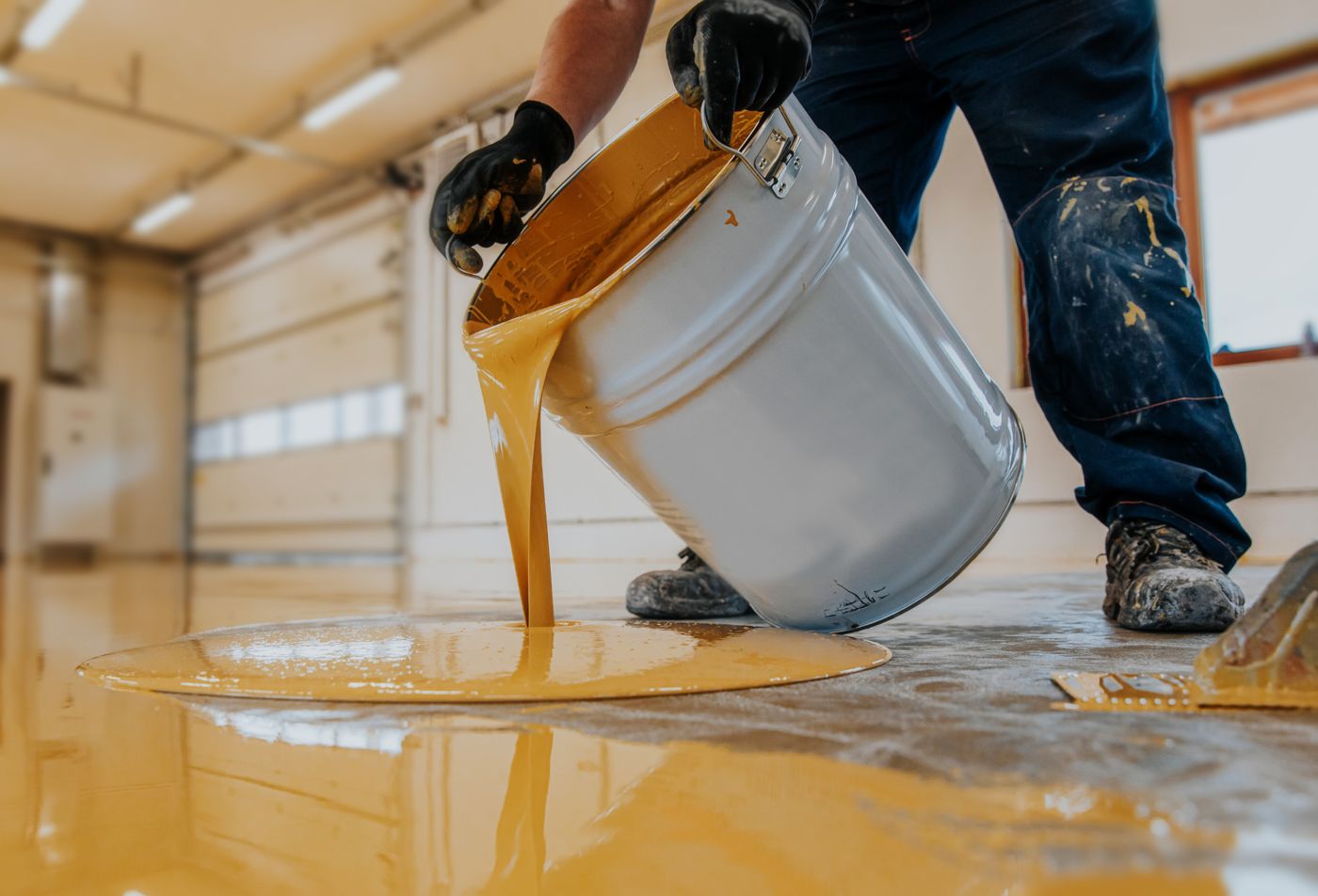 Fast-cure application
Working with a fast-curing coating in Arizona heat.
Polyaspartic cures faster as temperature rises, which is a benefit and a challenge in Arizona. On hot summer days, working time can shrink dramatically. Experienced crews mix smaller batches, work in sections, start early in the morning and adjust products and techniques to the conditions. Inexperienced applicators can end up with roller marks, bubbles or areas where the topcoat cured before it leveled.
We schedule summer installs to start early, use slower-cure formulations when temperatures climb and monitor slab temperature throughout the day. In the cooler months, polyaspartic still cures quickly enough for one-day projects, which makes it ideal for year-round scheduling in San Tan Valley.
How a polyaspartic install day works.
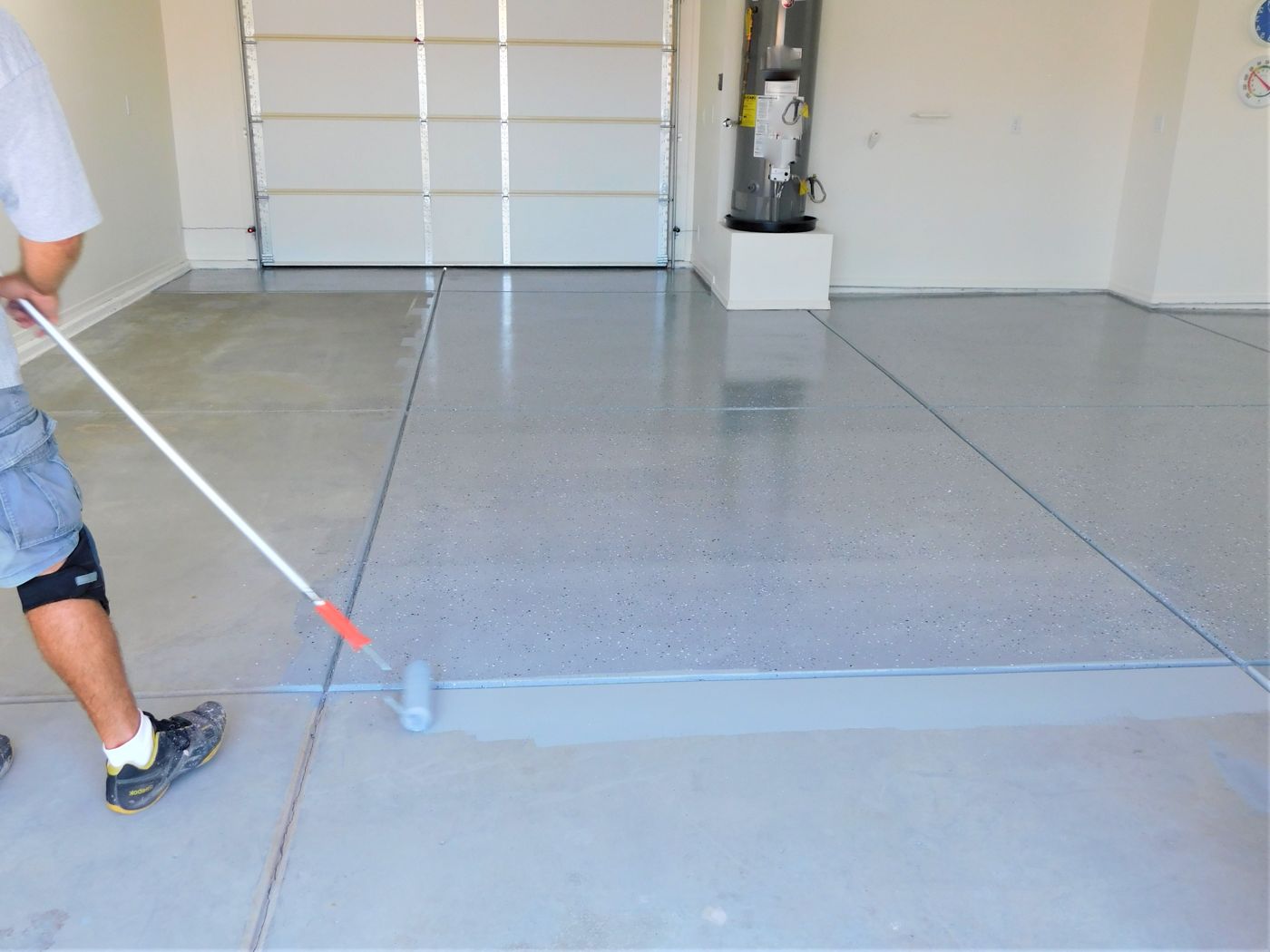
A typical polyaspartic garage project begins in the morning with diamond grinding and crack repair. The base coat is applied, flake is broadcast if selected, and the floor is scraped and vacuumed once cured. The polyaspartic topcoat is then rolled out in sections, with aggregate added if you want extra traction. Most two- and three-car garages are completed by the afternoon or early evening.
- Walk on the floor in socks that evening or the next morning.
- Return light items after about 24 hours.
- Park vehicles after the cure time we give you, often 24 to 48 hours.
Hot tire pickup and how polyaspartic prevents it.
Hot tire pickup is one of the most common complaints we hear from San Tan Valley homeowners who tried a DIY kit or hired a low-bid installer. It happens when hot tires, fresh off asphalt that can exceed 150 degrees in summer, park on a coating that softens under heat. As the tire cools, it grips the softened coating. When the car pulls out, it peels the coating off the concrete, leaving bare patches in the shape of each tire.
Three things prevent hot tire pickup: proper preparation, adequate film thickness and the right topcoat. Diamond grinding creates a profile the base coat can lock into. A properly built system has enough thickness to resist deformation. And a hard, heat-tolerant polyaspartic topcoat resists the softening that starts the problem. We combine all three on every garage floor.
Signs a coating may be prone to pickup
- Thin, water-based or low-solids epoxy rolled over acid-etched concrete.
- No mechanical grinding before coating.
- A single coat with no dedicated topcoat.
- Coatings that feel soft or tacky on hot afternoons.
If your current coating is failing, we can grind it off and install a polyaspartic system designed for Arizona heat.
Where polyaspartic makes the biggest difference.
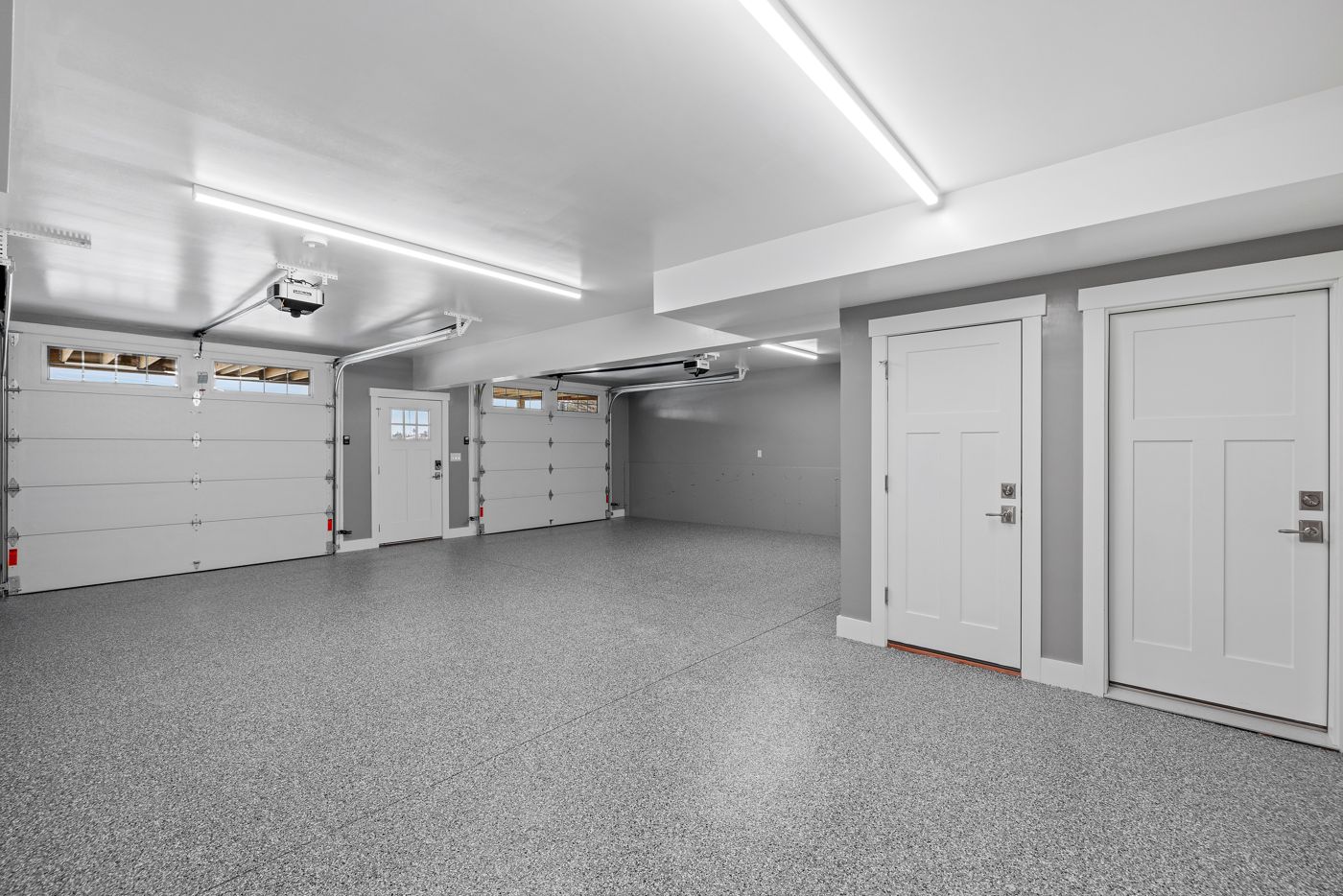
Polyaspartic is our default topcoat for any floor that sees sunlight, vehicles or chemicals. In residential settings, that includes garages, golf-cart and RV bays, covered patios, front entries, pool equipment areas and laundry rooms with outside doors. In commercial settings, it is often used in auto service bays, showroom floors near large windows, dock areas and food-service spaces that need quick turnaround.
It is also a smart choice when schedule matters most. Businesses that cannot close for several days, homeowners preparing for a move or a listing, and families who need the garage back for a weekend event all benefit from the speed of polyaspartic. With the right preparation, a two- or three-car garage can go from bare concrete to finished floor in a single working day, and a small retail space can be coated over a weekend and reopened on Monday morning.
What affects polyaspartic pricing.
Polyaspartic materials cost more per gallon than epoxy, but the faster installation can offset some of that through reduced labor and downtime. Pricing depends on the area, slab condition, the number of coats, whether flake or color is used, and add-ons such as stem walls and anti-slip texture. Our written quotes show each line item clearly.
Caring for a polyaspartic floor.
Sweep regularly to remove dust and grit. Wash with warm water and a pH-neutral cleaner. Use mats under tires during the monsoon season and pads under heavy equipment. Avoid harsh acids for routine cleaning. Polyaspartic topcoats are durable and can be recoated in the future if high-traffic areas begin to dull.
Polyaspartic Floor Coatings: common questions
Is polyaspartic better than epoxy?
For topcoats in sunny or high-traffic areas, polyaspartic usually performs better thanks to UV stability and faster cure. Epoxy remains excellent for base coats and interior decorative work. Many systems use both.
Can polyaspartic be installed in summer?
Yes. Our crews start early, use formulations suited to hot conditions and work in sections so the coating levels properly before curing.
Does polyaspartic have a strong smell?
Some polyaspartic products have a noticeable odor during application. We ventilate the space, and the smell fades quickly once the coating cures.
How soon can I park on it?
Usually 24 to 48 hours, depending on temperature and the specific products used. We give you a specific time on install day.
Can polyaspartic go on patios?
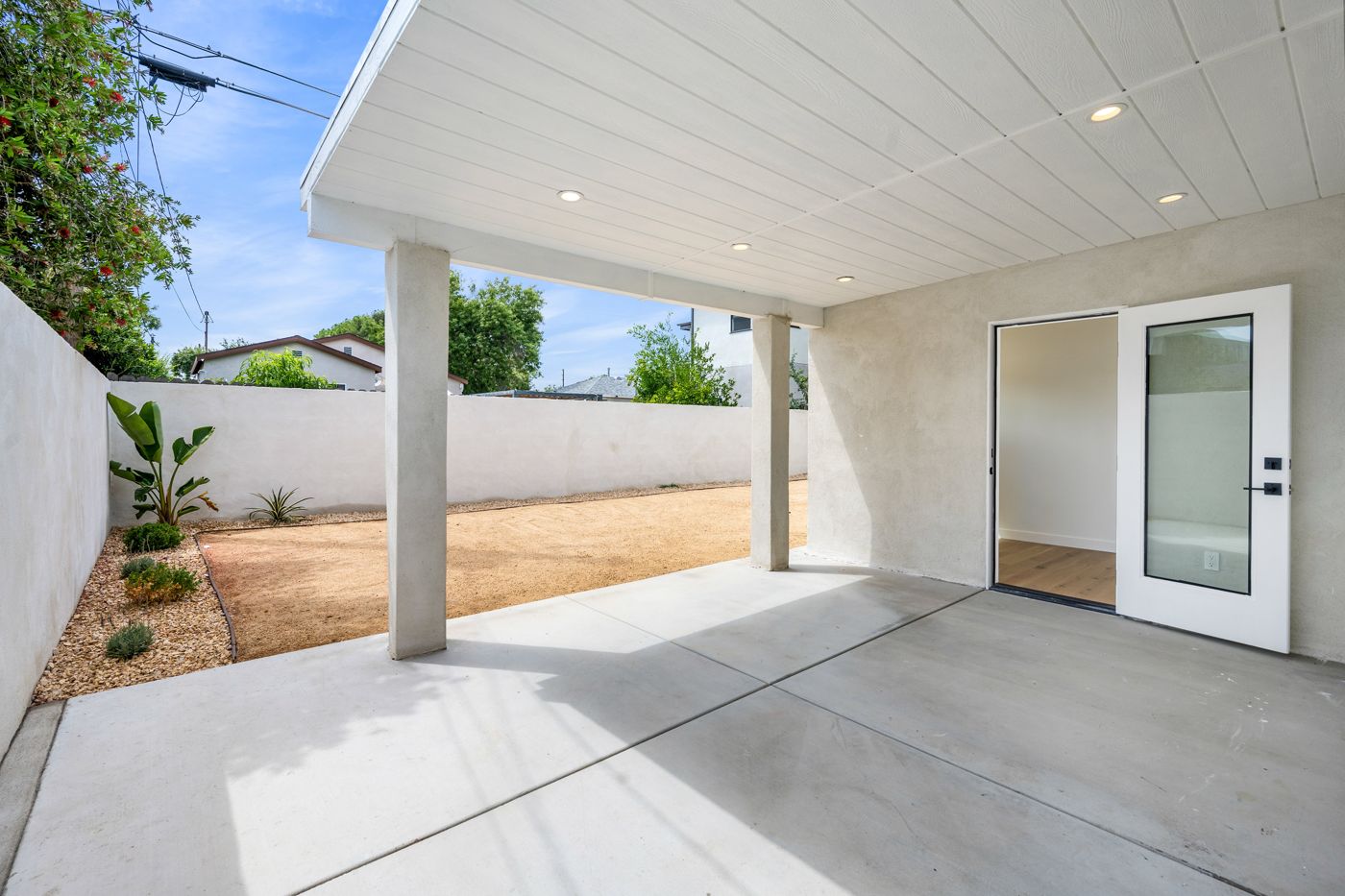
Yes. Its UV stability makes it a strong choice for outdoor coatings, especially with a light color and anti-slip texture.
Why did my DIY garage coating peel where the tires sit?
That is hot tire pickup. Thin coatings over un-ground concrete soften in Arizona heat and lift with the tires. A ground slab, proper film build and a polyaspartic topcoat prevent it.
Can polyaspartic go over my existing epoxy floor?
Sometimes. If the existing coating is well bonded, we can sand it and apply a polyaspartic topcoat. If it is peeling or contaminated, it should be removed first so the new system bonds to sound concrete.
Is polyaspartic good for commercial spaces?
Yes. Its fast cure, UV stability and chemical resistance make it a strong choice for showrooms, service bays and retail spaces that need to reopen quickly.