What makes a metallic epoxy floor different.
Metallic epoxy is a decorative coating that uses fine pearlescent and metallic pigments suspended in a clear or tinted epoxy. While the epoxy is still fluid, installers manipulate it with rollers, brushes, sprayers and solvents to create movement. The pigments shift and settle as the coating levels and cures, producing veining, swirls, ripples and depth that resemble marble, polished stone, flowing water or the surface of a gas giant.
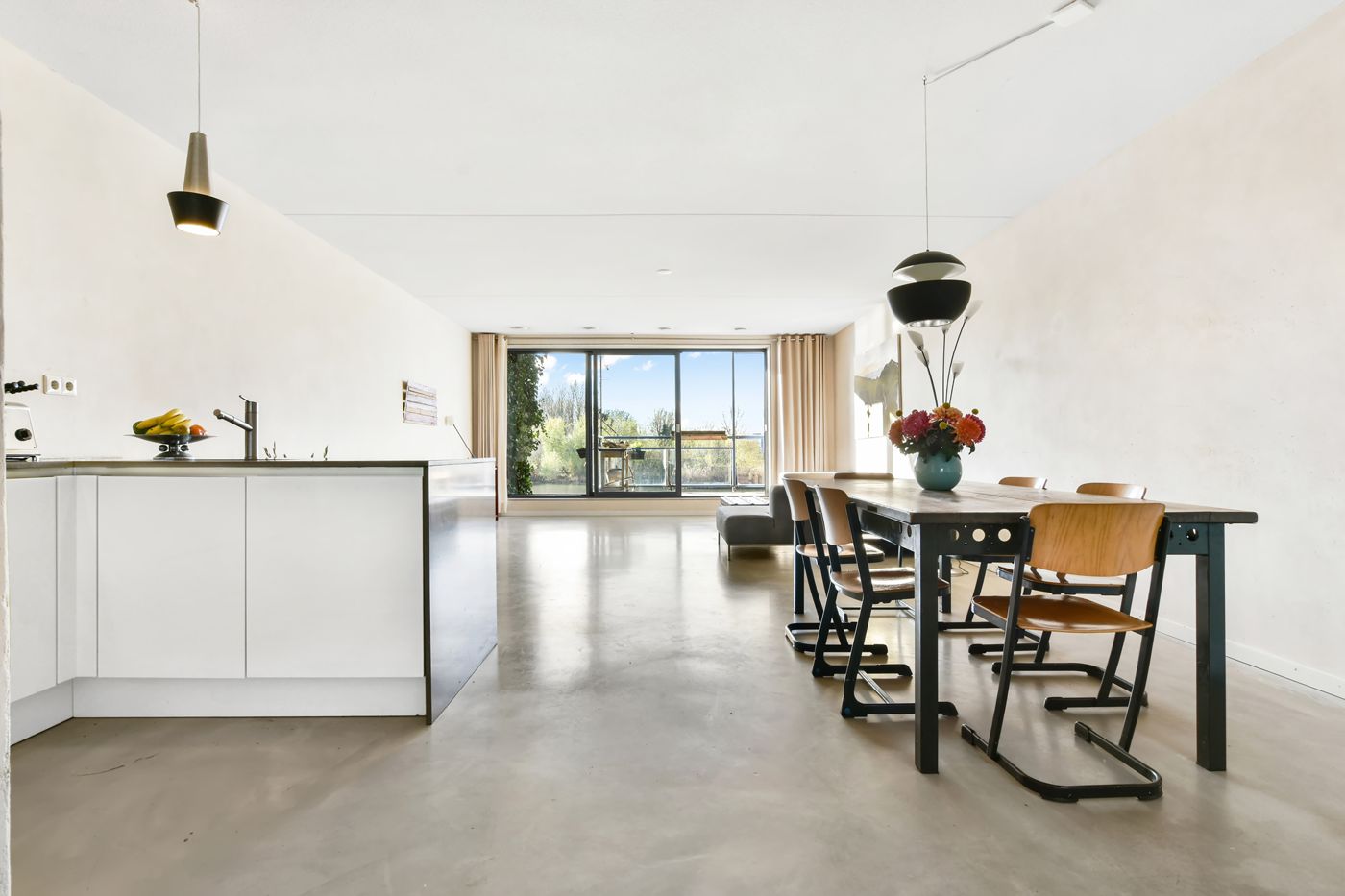
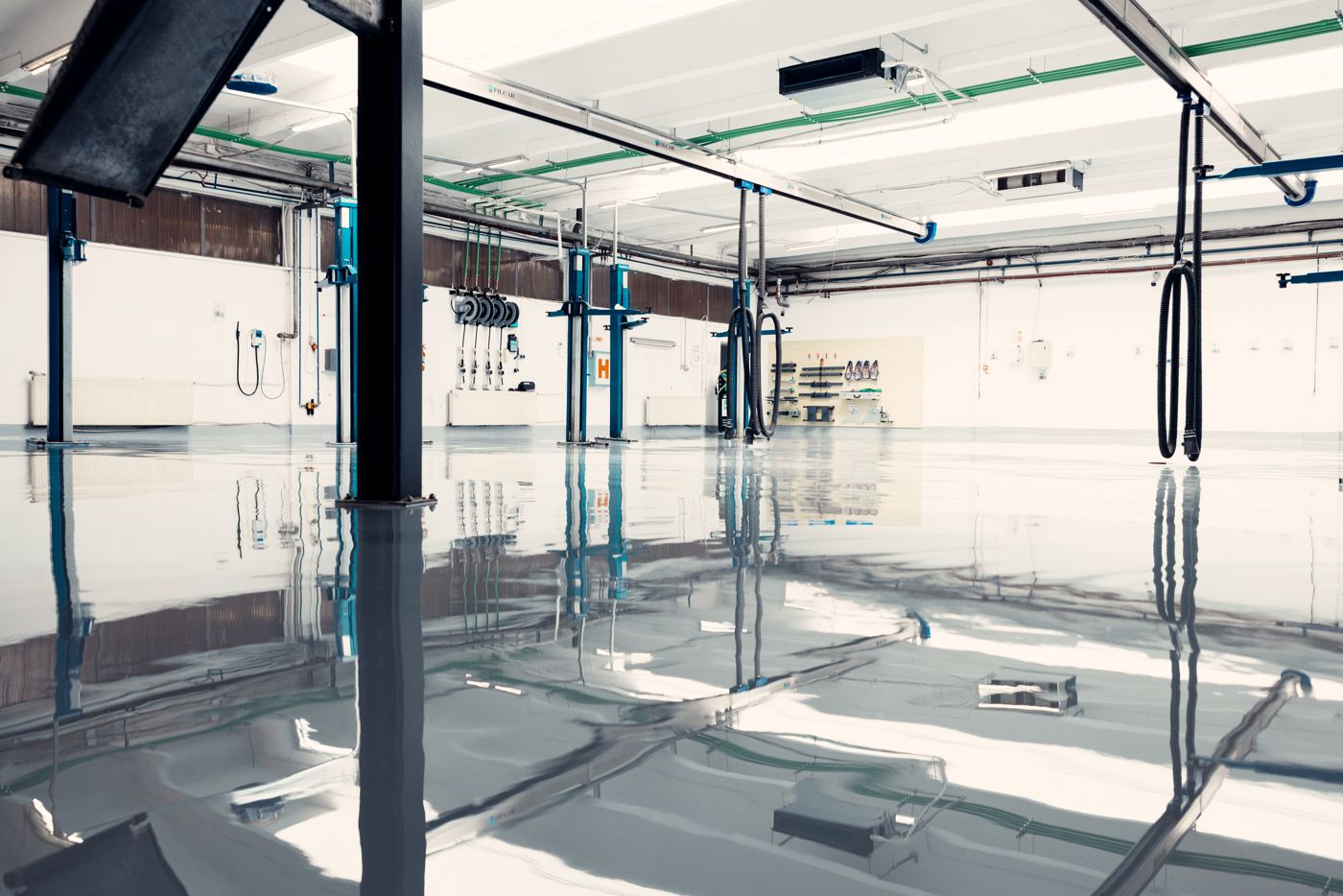
Unlike flake or solid-color systems, a metallic floor is designed to be the centerpiece of a room. It reflects light from windows and fixtures, changes appearance as you move through the space and creates a high-end look that photographs beautifully. In San Tan Valley we install metallics in living rooms, casitas, game rooms, home theaters, salons, boutiques, offices and the garages of homeowners who treat their car collection as a showcase.
How a metallic system is layered
- Ground and repaired concrete with a smooth, flat profile, since metallics reveal imperfections more than flake floors do.
- Primer and tinted base coat that sets the overall tone and seals the slab.
- Metallic body coat applied thick and worked by hand to create the design.
- Clear topcoat in high gloss or satin for wear, chemical and UV protection.
Why homeowners and businesses pick metallic.
People choose metallic floors because they want something that feels custom. Production homes in San Tan Valley often share floor plans, finishes and color palettes. A metallic floor changes that instantly. It gives a casita or great room a luxury feel, turns a retail space into a memorable environment and makes a garage feel like a private showroom.
Practical advantages
- Seamless. No grout lines or seams to collect dust or harbor bacteria.
- Durable. Epoxy and urethane topcoats stand up to foot traffic, furniture and pets.
- Easy to clean. A dust mop and damp mop keep the surface bright.
- Reflective. The glossy finish bounces light and can make rooms feel larger and brighter.
- Design freedom. Colors, movement and sheen can be tailored to match your décor or brand.
Metallic floors also work well in desert homes because they stay cool underfoot and can echo the natural palette outside: sandstone, sage, copper, slate and soft sunset hues. A well-chosen metallic can tie indoor living spaces to the views of the San Tan Mountains just beyond the windows.
Color palettes inspired by the Sonoran Desert.
The most popular metallic palettes we install in San Tan Valley draw from the surrounding landscape. Neutral, warm combinations feel calm in living spaces, while deeper and higher-contrast blends suit entertainment areas and commercial interiors.
- Desert pearl. Champagne, ivory and soft gold for a warm, luminous floor.
- Sage mist. Muted green, silver and sand, inspired by creosote and palo verde.
- Copper canyon. Copper, terracotta and bronze for a rich, earthy statement.
- Monsoon slate. Charcoal, silver and steel blue that recall storm clouds rolling over the mountains.
- Sunset quartz. Blush, cream and pale copper for a soft, modern look.
Movement styles
Beyond color, the technique determines the character of the floor. Long, sweeping veins look like marble. Tight cells and ripples resemble lava or agate. Soft, cloudy movement creates a subtle, modern feel. During the design consultation we show sample boards and photos of past patterns, then agree on a direction so there are no surprises.
Every metallic floor is hand-made, so variation is part of its beauty. We agree on colors and movement in advance, and then let the material do what it does best.
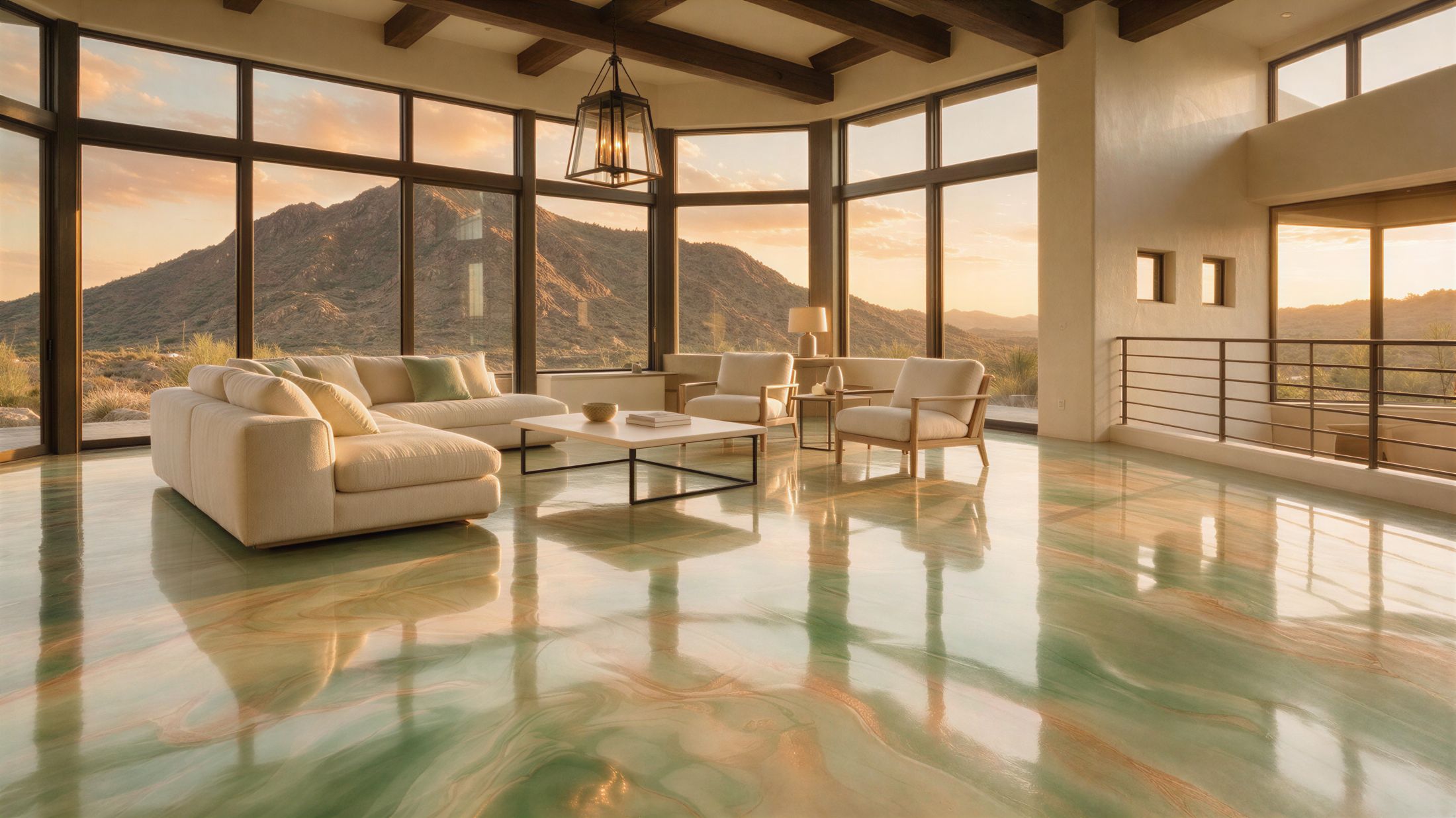 Sage and sand pearl metallic
Metallic floors in Arizona light and heat.
Arizona sunlight is both a gift and a challenge for metallic floors. The pigments shimmer beautifully in bright natural light, but standard epoxy can amber over time when exposed to direct UV. For rooms with large west- or south-facing windows, and for garages that are often open, we finish metallics with a UV-resistant topcoat to protect color and clarity.
Metallic floors also demand a flatter, smoother substrate than flake floors. Many interior slabs in the area have adhesive residue from carpet or tile, as well as cracks and dips from settling. We grind the slab carefully, repair cracks and fill low spots so the metallic layer cures evenly. Large cracks that might move are discussed in advance, since metallic floors highlight anything that shifts underneath.
How a metallic installation unfolds.
Metallic projects typically take two to four days depending on size. Day one is devoted to preparation: grinding, crack repair, patching and priming. The tinted base coat follows. On the metallic day, the crew mixes pigments in batches, pours and spreads the coating, then manipulates it while it is workable. This step requires a coordinated team and careful timing because the epoxy only stays fluid for a limited window. After curing, the floor is lightly sanded if needed and finished with the clear topcoat.
- Remove furniture and décor from the area before work begins.
- Plan for the space to remain closed for about two to three days.
- Expect light foot traffic about 24 hours after the topcoat and furniture after the cure time we provide.
Rooms and businesses where metallic epoxy shines.
Metallic floors are most rewarding in spaces where people linger and notice their surroundings. In San Tan Valley homes, the most common projects are great rooms with large windows, casitas that need a wow factor, home theaters and game rooms, home offices and the occasional primary bathroom with a curbless shower. Because the floor is seamless, it flows from room to room without transitions, which makes open floor plans feel larger and more cohesive.
For businesses, metallic epoxy works well in salons, boutiques, tasting rooms, dental and medical reception areas, car showrooms and creative offices. A custom color palette can echo your brand, and logos or borders can be integrated into the floor. Clients often comment on the floor first, which makes it a quiet but effective part of the customer experience.
When metallic is not the best fit
We are honest about limits. Metallics are not ideal in garages that open to the street daily, in muddy entryways or in areas with heavy grit, because the glossy surface shows dust and fine scratches more than flake. If your space falls into one of those categories, we can suggest a flake or solid-color system, or a satin metallic with a tougher topcoat that is more forgiving.
What affects metallic floor pricing.
Metallic floors are a premium finish because they require more material, more labor and skilled hand work. Pricing depends on the area, the condition of the slab, the number of colors, the complexity of the design and the topcoat selected. Rooms with many doorways and corners take longer to manipulate evenly. We provide a detailed written quote so you can see how design choices affect the total.
Caring for a metallic floor.
Dust mop frequently to remove grit that could dull the gloss, and damp mop with a pH-neutral cleaner. Use felt pads under furniture legs, and avoid dragging heavy items. Place mats at entries to catch desert sand. If the topcoat dulls in high-traffic paths over time, it can be lightly abraded and recoated to restore the shine without touching the metallic design below.
Metallic Epoxy Flooring: common questions
Can I choose exactly how my metallic floor will look?
You choose the colors, movement style and sheen, and we show samples of each. Because the material moves as it cures, the final pattern is unique and cannot be copied exactly from a photo.
Is metallic epoxy slippery?
The high-gloss surface can be slippery when wet. For areas that see moisture, we can add a fine anti-slip additive to the topcoat or use a satin finish.
Can metallic epoxy go in a garage?
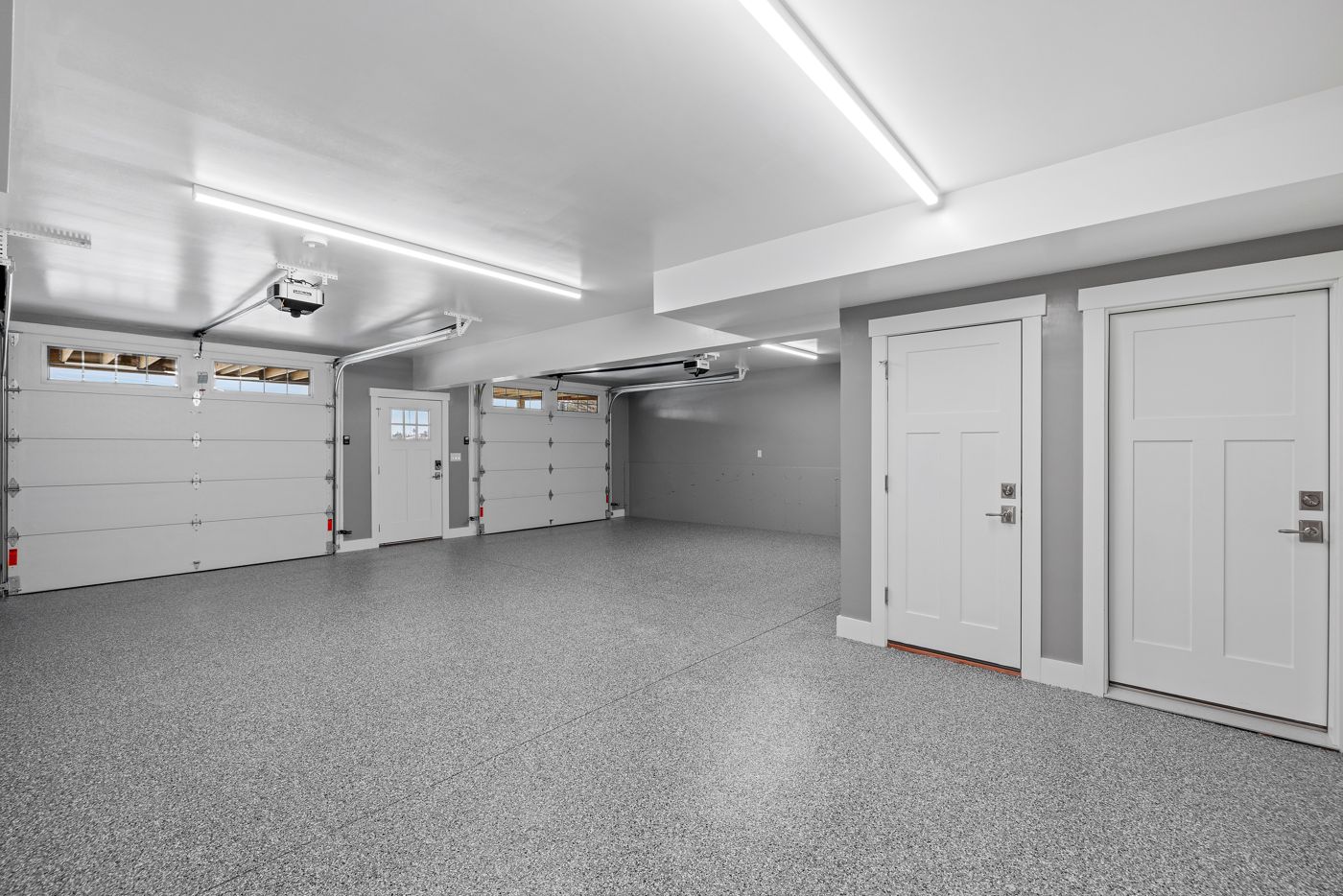
Yes. It works best in garages that stay closed and clean. Because it shows dust and tire marks more than flake, most homeowners use metallic in showcase garages rather than everyday parking spaces.
Will a metallic floor scratch?
Like any glossy surface, it can scratch from grit or dragged furniture. A durable topcoat, felt pads and regular dust mopping keep it looking new.
How long does it take to install?
Most residential metallic projects take two to four days, including prep, base coats, the metallic layer and the topcoat.
Can you add a logo or design?
Yes. Logos, borders and color zones can be incorporated into a metallic floor for businesses, home theaters and garages.
Does a metallic floor need a perfectly flat slab?
It needs a smooth, reasonably flat slab. We grind, patch and fill low spots before the metallic layer so it levels evenly. Severe dips may need a self-leveling underlayment, which we would identify during the visit.
Can a metallic floor be refreshed later?
Yes. The clear topcoat protects the design and can be lightly abraded and recoated years later to restore gloss without disturbing the metallic layer underneath.
Is metallic epoxy good for homes with pets?
It cleans easily and handles accidents well, but large dogs can leave fine scratches on high gloss. A satin topcoat hides wear better in pet-friendly homes.